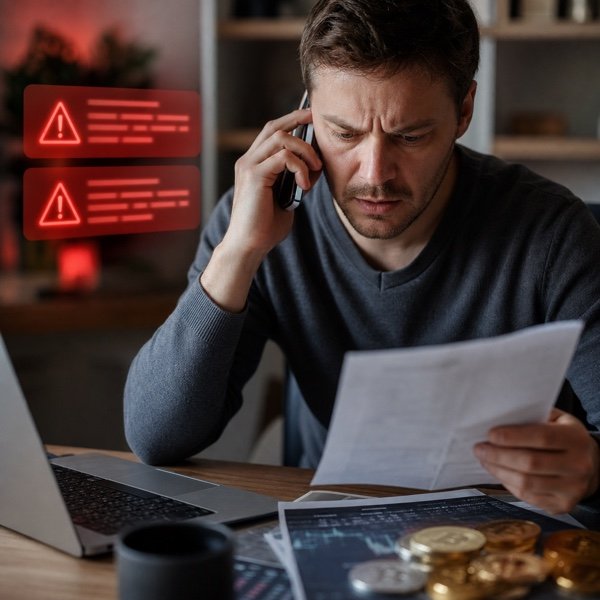

How to Recover Funds From a Fake Crypto Exchange: What to Know Before Trusting Reddit
Discovering that a cryptocurrency exchange may be fake can be alarming.
You may have already deposited Bitcoin, USDT, Ethereum, or another cryptocurrency. The platform may show profits in your account, but when you try to withdraw, something suddenly changes.
Customer support may demand another payment.
Your account may be frozen.
Or the platform may simply stop responding.
At that point, many victims start searching online for answers.
Reddit is often one of the first places they look.
That can be useful because crypto communities frequently discuss fake exchanges, scam patterns, suspicious websites, and recovery fraud.
But it creates another risk.
Reddit can help you recognize a scam, but an anonymous Reddit user cannot guarantee that your cryptocurrency will be recovered.
People who have already lost money are frequently targeted again by scammers claiming to be hackers, investigators, lawyers, or cryptocurrency recovery specialists.
Before trusting anyone offering help, understand what legitimate recovery may involve and what warning signs suggest you are being targeted again.
First, Stop Sending Money to the Fake Exchange
If you believe the exchange is fraudulent, the most important immediate step is to stop sending additional cryptocurrency.
Fake platforms frequently block withdrawals and then claim another payment is required.
You may be told to pay:
- a withdrawal fee
- a tax
- a security deposit
- a verification fee
- a liquidity charge
- an account upgrade
- an anti-money-laundering fee
The terminology can make the demand sound legitimate.
But the FBI warns that fake cryptocurrency investment platforms often use supposed taxes and fees to extract even more money after victims attempt to withdraw.
Paying usually does not unlock the account.
Another payment request often follows.
Understand That the Displayed Balance May Not Be Real
A fake exchange can display almost any number it wants.
Suppose you deposited $4,000.
After several weeks, your account dashboard shows:
$6,500.
Then $10,000.
Eventually, the platform claims your account contains $25,000.
When you attempt to withdraw, support says you need to pay a $3,000 tax.
The payment can feel reasonable because you believe $25,000 is waiting for you.
But on a fake exchange, that $25,000 may never have existed.
The operators can create fake profits, fake trades, fake bonuses, and fake balances to encourage larger deposits.
The money you send to pay the new fee is real.
The number displayed on the screen may not be.
Save Your Transaction Records
If cryptocurrency has already been transferred, preserve the transaction details.
One of the most important records is the transaction hash, sometimes called a transaction ID or TxID.
The transaction hash allows the transfer to be located on the relevant blockchain.
Save:
- transaction hashes
- sending wallet addresses
- receiving wallet addresses
- the cryptocurrency involved
- the blockchain network
- the amount transferred
- the date and time
The FBI specifically recommends preserving wallet addresses, transaction IDs, cryptocurrency amounts, dates, communication methods, websites, and other identifiers when reporting cryptocurrency fraud.
Save Evidence From the Fake Exchange
Scam websites can disappear quickly.
Do not assume the platform will remain available while you decide what to do.
Save evidence such as:
- the website address
- screenshots of your account
- displayed balances
- deposit instructions
- withdrawal error messages
- emails
- WhatsApp conversations
- Telegram messages
- social media profiles
- phone numbers
- names used by supposed employees
If the platform later disappears, these records may help an exchange, investigator, regulator, or law-enforcement agency understand what happened.
Check the Cryptocurrency on the Blockchain
Public blockchain records can help you verify where cryptocurrency actually moved.
A blockchain explorer allows you to search a transaction hash or wallet address.
Depending on the blockchain, you may be able to see:
- the original transfer
- the receiving wallet
- the amount transferred
- whether the transaction was confirmed
- whether the funds later moved elsewhere
This is useful because the fake exchange's dashboard cannot be trusted.
The blockchain provides an independent record of the actual transaction.
However, blockchain tracing has limits.
Knowing where the cryptocurrency moved does not automatically reveal the identity of the person controlling the destination wallet.
Tracing Crypto Is Not the Same as Recovering It
This distinction is essential.
Someone may be able to follow stolen cryptocurrency across several blockchain addresses.
That does not mean they can simply return it to you.
A blockchain address is public.
The private key controlling it is not.
Without control of the relevant keys, cooperation from a custodial service, or appropriate legal authority, simply identifying an address does not provide access to the funds.
This is why claims such as:
"We traced your USDT, therefore we guarantee recovery"
should be treated with skepticism.
Contact the Legitimate Exchange You Used
Fake exchanges often tell victims to buy cryptocurrency through legitimate services first.
For example, the scammer may instruct you to:
- open an account with a real cryptocurrency exchange
- deposit money
- buy USDT, Bitcoin, or Ethereum
- send the cryptocurrency to the fake exchange
If you used a legitimate exchange during this process, contact it through its official support or fraud-reporting channel.
Provide the transaction details and explain why you now believe the destination was fraudulent.
The exchange may not be able to reverse a completed blockchain transaction.
But reporting it may help preserve records, identify suspicious accounts, or support a later investigation.
Report the Fraud Through Official Channels
Consider reporting the fake exchange to the appropriate authorities in your jurisdiction.
Depending on where you live, that may include:
- law enforcement
- a cybercrime reporting agency
- a financial regulator
- a securities regulator
- a consumer protection authority
Include specific evidence rather than simply saying:
"A crypto exchange stole my money."
Transaction hashes, wallet addresses, amounts, dates, websites, messages, and account screenshots can make the report more useful.
Can Funds From a Fake Exchange Ever Be Recovered?
Sometimes.
But recovery should never be treated as guaranteed.
It may become possible when:
- the stolen cryptocurrency reaches an identifiable centralized exchange
- law enforcement successfully identifies the criminals
- assets are frozen or seized
- private keys become available during an investigation
- a court orders assets returned
- a government or legal compensation process is created
These processes can take time and depend heavily on the circumstances.
Some victims recover part of their losses.
Others recover nothing.
Nobody on Reddit can know the outcome simply by looking at your post.
What Reddit Can Be Useful For
Reddit can still be valuable if you use it carefully.
Crypto communities can help you discover whether other users have encountered similar:
- website designs
- withdrawal demands
- investment stories
- WhatsApp groups
- Telegram accounts
- fake customer support scripts
- recovery scams
Searching the name of a suspicious platform alongside words such as "scam," "withdrawal," or "Reddit" may reveal previous complaints.
Community posts can also help you recognize scam patterns that were difficult to notice while you were involved.
But these posts are anecdotal.
They should be treated as clues for further research, not final proof.
What Reddit Cannot Reliably Do
Reddit cannot verify that an anonymous person is actually a lawyer, investigator, exchange employee, law-enforcement officer, or blockchain recovery expert.
A Reddit username is not professional verification.
Someone may post:
"Message this recovery expert. He recovered all my Bitcoin."
That comment could have been written by:
- another genuine victim
- a recovery scammer
- an account controlled by the same criminal operation
- someone promoting a paid service
You cannot tell simply from the comment.
This is particularly important when someone quickly moves the conversation into private messages.
Be Extremely Cautious With Reddit Direct Messages
Public scam posts can attract private messages from supposed recovery specialists.
Someone may tell you:
"I saw your post. I know someone who recovered my funds."
Or:
"I'm a blockchain investigator and I can trace the wallet."
The FBI warns that fraudulent cryptocurrency recovery businesses commonly contact victims through social media and messaging platforms.
The fact that the person found you because you publicly discussed losing crypto should increase your caution, not reduce it.
Reddit Communities Warn About Recovery Scams Too
One useful feature of Reddit is that crypto-scam communities frequently warn victims about exactly this problem.
Recent discussions in crypto-scam communities repeatedly describe fake recovery operators approaching people after their original loss and demanding payments for hacking, tracing, legal services, or supposed fund releases.
That community warning is consistent with official FBI and FTC guidance.
The important lesson is not that every person on Reddit is untrustworthy.
It is that a recommendation from an anonymous account should never replace independent verification.
Never Trust a Recovery Service Because of Testimonials Alone
Recovery scammers understand that victims want proof.
They may show:
- Reddit comments praising the service
- screenshots of successful recoveries
- customer testimonials
- Telegram success stories
- fake legal documents
- supposed blockchain tracing reports
These materials can be fabricated.
The FBI specifically warns that fraudulent cryptocurrency recovery operations may use fake success stories and false reviews to appear legitimate.
A screenshot saying someone recovered $100,000 proves very little by itself.
Red Flag: Guaranteed Recovery
Be suspicious of anyone claiming:
- "100% recovery guaranteed"
- "We can reverse blockchain transactions"
- "We can hack the scammer's wallet"
- "Your money will be recovered within 24 hours"
- "We never fail to recover crypto"
Legitimate blockchain investigations can trace cryptocurrency.
That does not mean every loss can be recovered.
A credible professional should be able to explain the limitations of the process instead of guaranteeing an outcome they cannot control.
Red Flag: Upfront Recovery Payments
Another major warning sign is a demand for money before the supposed recovery can continue.
The payment might be called:
- a tracing fee
- a blockchain fee
- a legal deposit
- a wallet activation payment
- a government tax
- a recovery certificate fee
The FTC warns that refund and recovery scammers specifically target people who have already lost money and then demand another payment before supposedly returning it.
The FBI has also warned about fraudulent crypto recovery companies that charge upfront fees, provide incomplete tracing reports, and then demand even more money.
Red Flag: They Need Your Seed Phrase
Never provide a recovery service with your seed phrase or private key.
Someone may claim they need your phrase to:
- verify wallet ownership
- receive recovered cryptocurrency
- synchronize your wallet
- connect to the recovery network
None of those explanations makes sharing your recovery phrase safe.
Anyone who obtains it may be able to control whatever cryptocurrency remains in the wallet.
You could lose more money while trying to recover the original loss.
Red Flag: They Ask for Remote Access
Be careful if a supposed recovery specialist asks you to install remote-control software.
Once someone can remotely control your computer, they may be able to view sensitive information or access financial accounts.
The FBI warns that fraudsters impersonating cryptocurrency companies and technical support may attempt to obtain remote access to victims' devices.
Do not allow an unverified stranger from Reddit, Telegram, WhatsApp, or another platform to remotely control a device containing your wallets, passwords, or financial accounts.
Red Flag: They Claim to Work With Law Enforcement
Recovery scammers may claim that they work with:
- police departments
- the FBI
- financial regulators
- international investigators
- government agencies
Verify those claims independently.
Do not use the phone number, email address, or website supplied by the person making the claim.
Find the agency's official contact information yourself.
The FBI specifically warns that law enforcement does not charge victims a fee simply to investigate crimes.
Red Flag: A Recovery Deposit
Sometimes the scammer avoids calling the payment a fee.
They say your recovered cryptocurrency has already been found but your wallet needs to demonstrate sufficient liquidity before receiving it.
You are asked to deposit $5,000 into a wallet.
Or they may tell you that the blockchain requires a matching balance before funds can be released.
This is another version of an advance-fee scam.
Do not assume that unusual technical terminology makes the payment necessary.
Be Careful When Someone Provides a Blockchain Tracing Report
A tracing report can look impressive.
It may contain:
- wallet addresses
- transaction diagrams
- exchange names
- blockchain screenshots
- large dollar values
Some of the blockchain information may even be real.
That does not prove the person can recover the money.
Public transaction records are available to anyone.
A scammer can copy real blockchain information into a professional-looking report and then claim that another payment is needed to complete the recovery.
The FBI warns that some fraudulent recovery companies produce incomplete or inaccurate tracing reports before demanding additional fees.
How to Research a Recovery Company Before Trusting It
If you are considering professional help, independently investigate the person or company.
Check:
- the company's legal name
- corporate registration
- physical address
- how long the business has operated
- the identities of the people involved
- professional licences where applicable
- regulatory records
- independent complaints
Search the company name alongside words such as:
- scam
- complaint
- review
- fraud
The FTC specifically recommends independently researching organizations offering recovery services rather than trusting their claims.
A Professional Website Does Not Prove Legitimacy
Recovery scammers can create convincing websites just like fake exchanges can.
A website may contain:
- professional photographs
- legal language
- client reviews
- company registration numbers
- security logos
- office addresses
Some of that information may belong to a real company that the scammers are impersonating.
Verify important information through independent sources rather than clicking links supplied by the recovery service.
Do Not Publicly Share Sensitive Evidence on Reddit
You may want to ask the community whether a transaction or website looks suspicious.
Be careful about how much information you publish.
Do not post:
- your seed phrase
- private keys
- exchange passwords
- two-factor authentication codes
- identity documents
- private account recovery information
A public wallet address or transaction hash is different from a private key, but you should still consider the privacy implications before linking your identity to specific wallet activity.
Do Not Announce Exactly How Much You Lost Unless Necessary
Posting the size of your loss can make you more attractive to recovery scammers.
For example:
"I lost $150,000 on a fake exchange and desperately need someone to recover it."
tells criminals several things immediately.
They know you lost a large amount.
They know you want recovery assistance.
And they may assume you are willing to spend significant money trying to get it back.
Share only the information needed to understand the scam pattern.
What If Someone on Reddit Says They Recovered Their Money?
Treat the claim as unverified until you can independently confirm it.
A genuine victim may be sharing a real experience.
But the account could also be:
- promoting its own recovery service
- receiving payment for referrals
- controlled by a scammer
- using fabricated screenshots
Do not send money simply because several accounts recommend the same person.
Scam operations can control multiple accounts.
What If You Already Paid a Recovery Scammer?
Stop making additional payments.
Save the evidence from the recovery scam as well as the original fake exchange.
Record:
- wallet addresses
- transaction hashes
- emails
- Reddit usernames
- messages
- websites
- phone numbers
- payment instructions
Report both incidents where appropriate.
The recovery operation may be connected to the original scam or may be an entirely separate criminal group.
Protect Your Wallets and Accounts
If you shared sensitive information during either the original scam or the recovery attempt, secure your remaining assets.
If an exchange password may have been exposed:
- change it through the official exchange
- review login activity
- enable strong two-factor authentication
- remove unknown devices or API keys
If your seed phrase or private key was exposed, treat the wallet as compromised.
If you still control assets, consider moving them carefully to a new wallet with completely fresh recovery information created on a trusted device.
Changing a wallet application's password does not make an exposed seed phrase secure again.
What You Can Realistically Do
If you lost cryptocurrency through a fake exchange, realistic actions include:
- Stop sending additional money.
- Preserve transaction hashes and wallet addresses.
- Save the fake exchange website and communication evidence.
- Check the blockchain transaction independently.
- Contact legitimate exchanges involved through official channels.
- Secure your wallets, email, and exchange accounts.
- Report the fraud to appropriate authorities.
- Research any professional recovery assistance independently.
- Ignore unsolicited recovery offers.
- Never provide your seed phrase or private key.
These steps cannot guarantee that your funds will return.
They can help protect what remains, preserve useful evidence, and prevent another scam.
Use Reddit for Research, Not Blind Trust
Reddit can be useful after a fake crypto exchange scam.
You may discover other victims.
You may recognize a familiar website, investment script, withdrawal fee, or fake support pattern.
Experienced community members may point out warning signs you missed.
But Reddit should be one part of your research.
It should not become the place where you hand over your wallet credentials or send another payment because an anonymous user claims to know a recovery expert.
The FBI and FTC both warn that people who have already lost money are frequently targeted by recovery scammers.
Recent crypto-scam discussions on Reddit show the same problem: victims post about their losses and are then approached by people offering recovery services.
That is why your first goal after discovering a fake exchange should not be finding someone who promises to recover everything.
Your first goal should be stopping further losses, documenting what happened, protecting your remaining accounts, and using verified channels for any investigation or report.
Reddit can help you ask better questions.
It should not decide who gets your money next.